
April 27, 2026
The Caribbean has one of the richest literary traditions in the English-speaking world. It also has a tourist reading list that largely ignores it.
If you tell most book clubs you’re reading Caribbean literature, they reach for the obvious: maybe a bit of Walcott for the Nobel Prize, maybe Wide Sargasso Sea because someone mentioned it in a college class. The actual depth of Caribbean writing — the novelists, the memoirists, the historians who’ve been documenting these islands with urgency and precision for decades — goes largely unread by people who have visited those islands many times.
These books deserve more than that. And they land very differently when you read them in the water they describe.
Wide Sargasso Sea — Jean Rhys
The obvious starting point, and obvious for good reason. Rhys grew up in Dominica and spent her career in exile writing the Caribbean back into existence — this novel most famously by giving Bertha Mason (the mad wife in the attic in Jane Eyre) her own voice and her own story. Antoinette Cosway is a white Creole woman caught between colonial worlds, married off to a man who will eventually rename her and lock her away.
It’s short, it’s hypnotic, it’s essential. Read it before you arrive in Dominica and stand on the volcanic shore where Rhys grew up. The book is in the landscape.
Washington Black — Esi Edugyan
A young enslaved boy on a Barbados sugar plantation in 1830 encounters a naturalist who is building a flying machine and needs a counterweight. What follows is a pursuit across continents — the Arctic, Nova Scotia, Morocco — that is partly an adventure novel, partly a meditation on what it means to be seen, and partly an argument about who gets to tell the history of the places they occupy.
Edugyan is a Canadian writer and this is not a Caribbean novel in the way Rhys is a Caribbean novelist — but Barbados, where the book begins, is rendered with the specificity of serious research, and the sugar plantation history is not softened. Excellent for book club discussion because it covers enormous ground and people reliably disagree about the ending.
The Mermaid of Black Conch — Monique Roffey
A fisherman in Trinidad in 1976 catches a mermaid. Or rather, he pulls up in his nets an ancient sea creature who was once a Taíno woman, cursed four centuries ago by a white colonial sailor. She comes ashore, slowly becomes human again, and an unlikely love story unfolds against the backdrop of a Caribbean fishing village.
Roffey won the Costa Novel Award for this in 2020 and it deserves the attention. It’s doing serious things with Caribbean mythology and colonialism and gender inside a story that is genuinely propulsive and strange. Book clubs tend to love it because there’s something in it for every kind of reader.
Annie John — Jamaica Kincaid
A girl grows up on Antigua, loves her mother completely, and then must leave. That’s the whole of it, and it contains everything. Kincaid’s prose is deceptively simple — she writes in long, looping sentences that accumulate weight the way Caribbean heat accumulates. Annie John is short enough to read in a day and rich enough to discuss for weeks. A Small Place, her nonfiction essay about Antigua and tourism, pairs perfectly with it if your book club wants to go deeper.
Brother Man — Roger Mais
Published in Jamaica in 1954 and largely out of print in mainstream editions, Brother Man is the kind of book that falls off the reading list and shouldn’t. A Rastafarian healer in a Kingston slum in the early 1950s. The language is extraordinary — Mais absorbed the rhythms of Jamaican speech and made something literary out of them twenty years before reggae did the same thing to music. If your book club wants to read Caribbean fiction that goes beyond the contemporary, start here.
Omeros — Derek Walcott
This is the ambitious one. Walcott’s epic poem — St. Lucia, the Odyssey reimagined, the wound of colonialism, the sea — is dense and demanding and genuinely great. Not every book club will want to tackle a 300-page poem. But the book clubs that do get from it something no novel can give: the Caribbean in language that sounds like the Caribbean sounds. Walcott won the Nobel Prize in 1992 in part for this. It earns the difficulty.
These six books are different enough that a book club could spend a year with them and never run out of things to argue about. The Roffey and Edugyan tend to be the easiest entry points. The Rhys and Kincaid are short enough to read in a week. The Mais is the one to seek out for readers who want to go beyond what’s easily available. The Walcott is for the book club that’s ready.
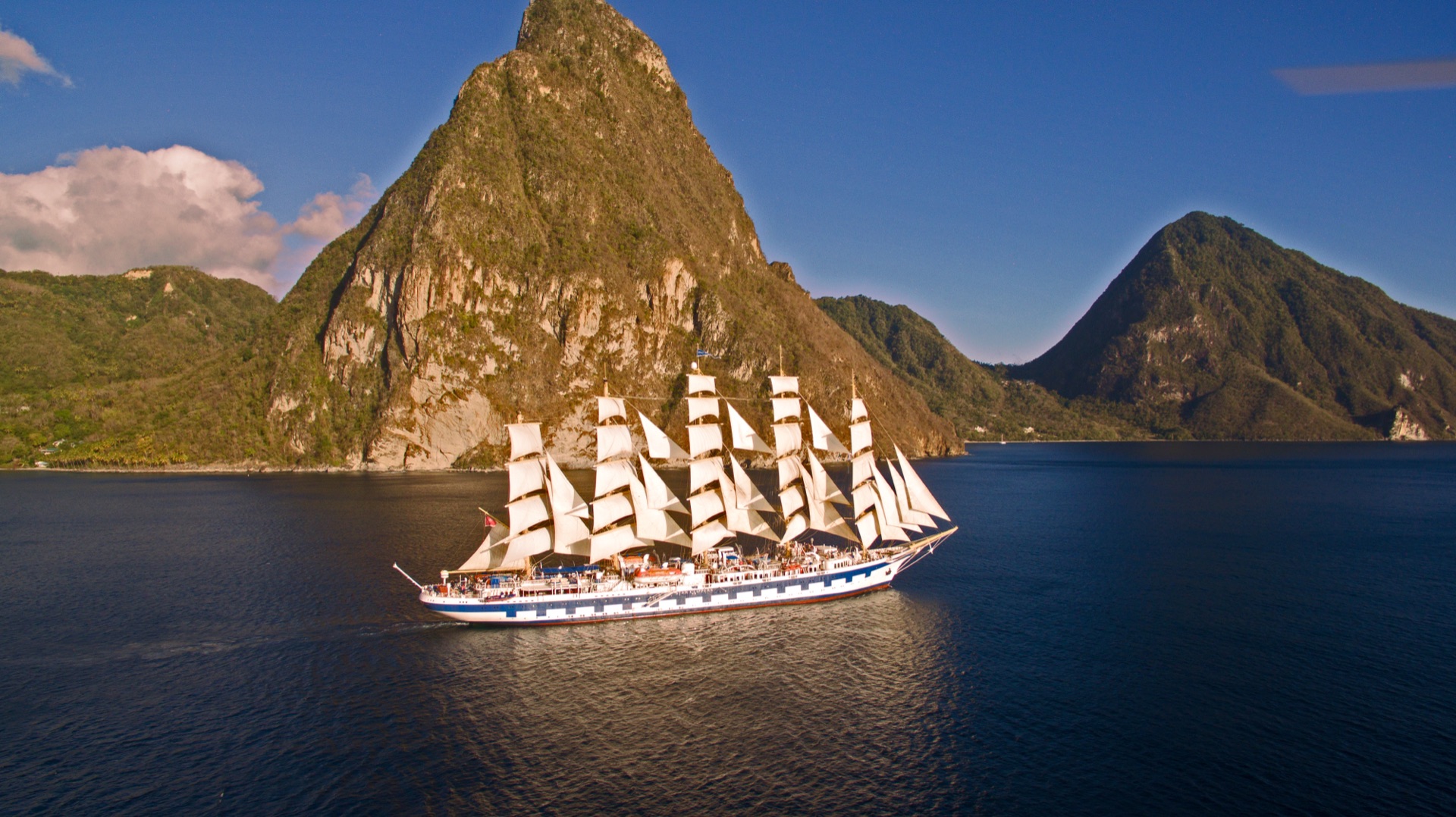
In March 2027, I’m taking eight women from Barbados to Martinique on the Royal Clipper — the world’s largest full-rigged sailing ship — with a reading list built around Caribbean literature and five months of discussion before we board. The book club arc starts in October 2026. More here →
Trip announcements, curated reading lists, and the occasional dispatch — before anyone else.