
April 26, 2026
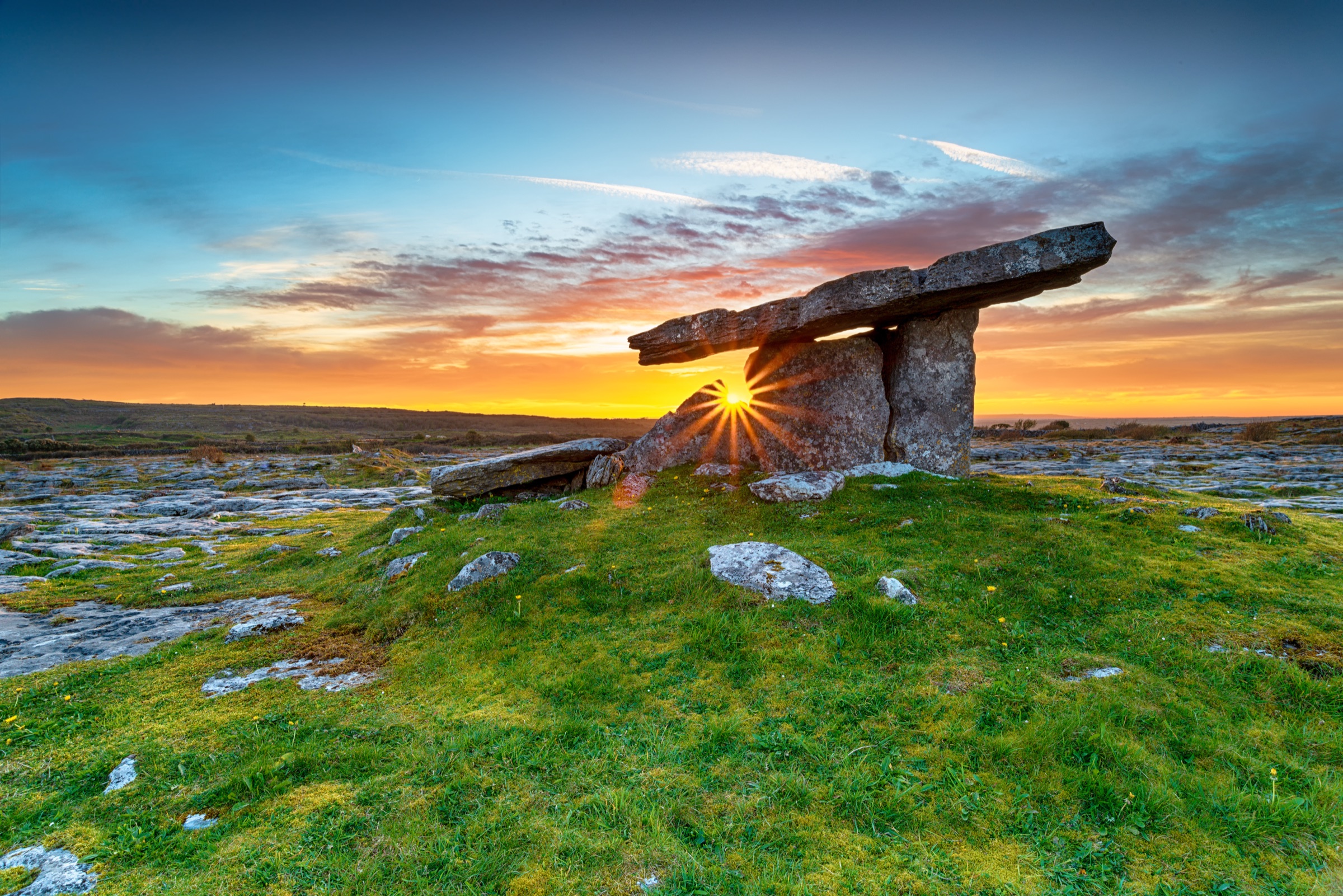
The west of Ireland has a tourist reading list and a real one. The tourist list has Yeats and Joyce and a bit of mythology. It’s not wrong — but it’s not the west of Ireland that Edna O’Brien grew up in, that Claire Keegan writes about, that Anne Enright spent a career trying to describe.
The real list is harder. It’s about what was expected of women in rural Ireland, what was said and not said, what the landscape held and what it refused to release. It’s one of the great bodies of literature in English, and it’s underread everywhere outside Ireland, and barely discussed even there.
These are the books that make the Burren make sense. Not as scenery. As a place with a history.
The Country Girls — Edna O’Brien
O’Brien grew up in Tuamgraney, County Clare, about twenty miles from the Burren. Her first novel — about two girls escaping rural Ireland for Dublin — was published in 1960 and immediately banned in Ireland. Her own parish priest burned it. The ban lasted years.
Read it and understand what Ireland was asking its women to be. Read it and understand why O’Brien spent her career in exile. Then drive through County Clare and see the landscape she was writing from. The distance between what the books say and what the countryside looks like is the subject of the whole body of work.
Foster — Claire Keegan
Fifty-eight pages. A girl is sent to stay with relatives for the summer while her mother has another baby. Nothing happens in the way that plots happen. Everything happens in the way that life happens — in silences, in careful gestures, in what the adults in the house don’t say and what the child slowly understands.
Keegan’s prose is so precise it hurts. Small Things Like These, her more recent novella, is equally devastating and has a male protagonist — but Foster is the one that matters for this trip. It’s about rural Ireland and silence and what women hold. Read it in one sitting. You won’t be able to stop.
The Green Road — Anne Enright
A family on the west coast of Ireland, scattered by emigration and choice, called home by their aging mother who is threatening to sell the house. Enright’s structure is formally ambitious — different perspectives, different decades — but it lands with the weight of a single devastating truth about family and landscape and the specific guilt of having left. The west coast appears throughout as something between home and trap. That tension is exactly right.
Are You Somebody? — Nuala O’Faolain
O’Faolain was a journalist, not a novelist, and this memoir — written when she was in her fifties — is about Irish womanhood and ambition and the particular difficulty of being a woman who wanted things in a country that hadn’t made room for that. It’s sharp and funny and occasionally devastating. O’Faolain died in 2008 having never quite gotten the credit she deserved. The memoir reads like a conversation with a very smart, very honest friend.
Stones of Aran: Pilgrimage — Tim Robinson
The Burren and the Aran Islands have the same geology and, Robinson argues, the same consciousness. This is nonfiction — a sustained meditation on the limestone landscape, its botany, its history, its mythology, its silences. Robinson spent decades mapping the west of Ireland with the attention of a scientist and the prose of a poet. If you want to understand what the Burren actually is — why the wildflowers grow the way they do, what the stone walls mean, how old this landscape is — this is the book. It’s slow and it rewards slowness.
The Secret Scripture — Sebastian Barry
A hundred-year-old woman in a psychiatric institution writes her memoir in secret. The novel moves between her voice and her psychiatrist’s, between contemporary Ireland and the Ireland of the early twentieth century — the Civil War, the Church, the particular brutality of what happened to women who didn’t fit. Barry writes sentences that stop you mid-page. This one has a Roscommon setting rather than Clare, but it belongs on this list because it’s the most direct reckoning with what Ireland did to its women, told by one of its best living writers.
Every book on this list is about landscape and silence and what women were permitted. That’s not a coincidence. The west of Ireland — the Burren, the Atlantic coast, the small towns that emptied of their young — produced this body of work because the landscape and the history demanded it.
When you read these books on the ground, in County Clare, in June when the wildflowers are out and the light lasts until half past nine, the reading and the place do something to each other. That’s what literary travel actually is.
In June 2028, I’m taking eight women to Gregans Castle Hotel on the edge of the Burren for a week of Irish women’s fiction, long evenings, and the wildflowers that shouldn’t exist on this limestone plateau but do. The book club arc starts in January 2028. More here →
Trip announcements, curated reading lists, and the occasional dispatch — before anyone else.